

News
News
Current position: Home News Industry information IGBT, which demand surge
IGBT, which demand surge

Industry information| 2022-05-25|admin

1.jpg

The PV inverter is the heart of a solar PV system. The photovoltaic inverter converts the direct current generated by the solar cell into alternating current that meets the power quality requirements of the grid, and is used in conjunction with the general alternating current power supply equipment. The performance of photovoltaic inverters can affect the stability, power generation efficiency and service life of the entire photovoltaic system.

IGBT is the core device of photovoltaic inverter. The rapid increase in photovoltaic installed capacity drives the growth of the inverter industry and provides impetus for the rapid development of IGBTs.

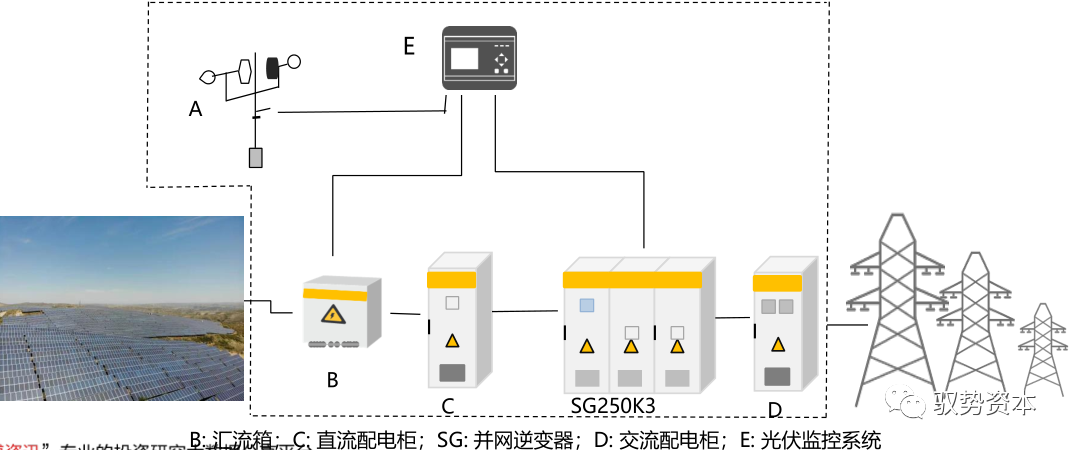
The principle of photovoltaic power generation:

2.png
Source: Compiled by Founder Securities Research Institute

Global PV Inverters
Rapid market growth

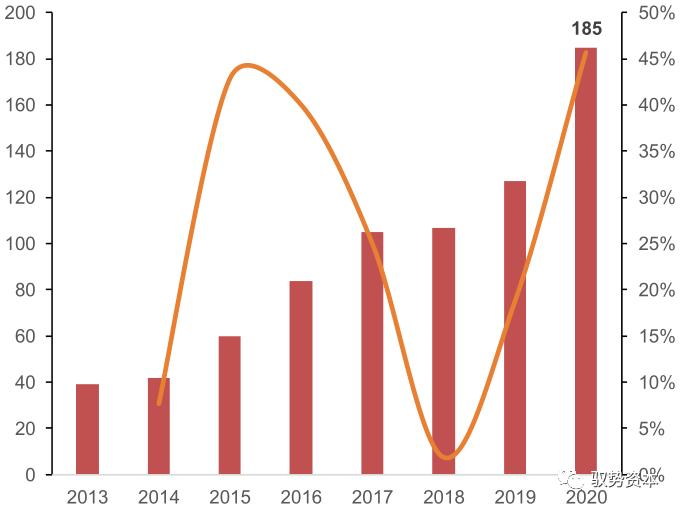
Policy incentives drive the increase in inverter shipments. Various government incentives have greatly promoted the development of the photovoltaic industry, and the shipments of photovoltaic inverters have increased significantly. In 2020, the global PV inverter shipments will reach 185GW, with a compound growth rate of 24% from 2013 to 2020.

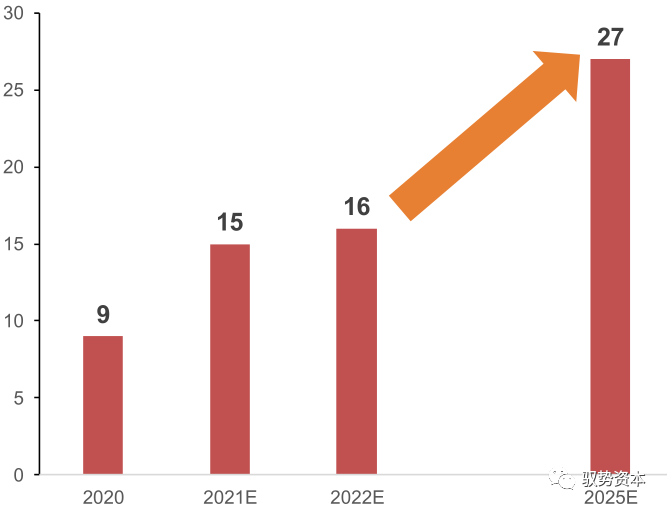
Demand for stock replacement continues. The service life of electronic components such as IGBTs in the inverter is generally 10-15 years, and the operating cycle of the modules is 25 years, so the inverter needs to be replaced at least once in the life cycle of the photovoltaic modules. According to estimates, the global replacement demand for photovoltaic inverters in 2020 is about 8.7GW, an increase of nearly 40% year-on-year.

Global PV Inverter Shipments (GW):

3.png

Global Replacement Demand (GW):

4.png
Source: Sobey Photovoltaic Network, Polaris Solar Photovoltaic Network, Compiled by Founder Securities Research Institute

China is the world's largest
PV inverter market

Europe, Middle East, Africa (EMEA region) is the region with the largest demand for PV inverter replacement. Replacement demand in the EMEA region reached 3.4GW in 2019, accounting for 54% of the global total, mainly due to the concentration of early PV installations in these regions.

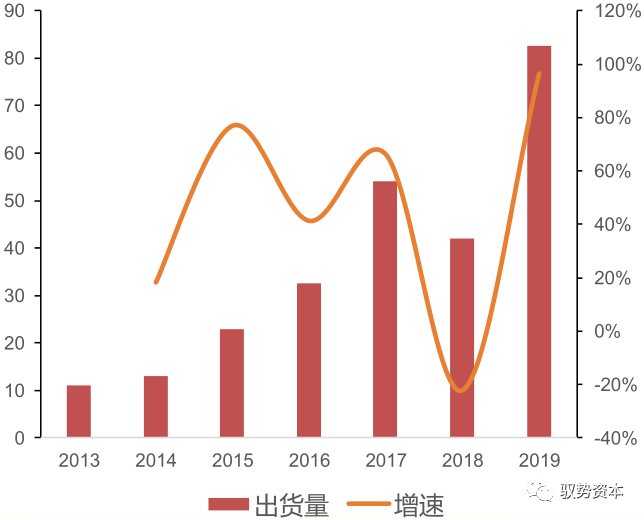
The growth of domestic photovoltaic installed capacity drives the demand for inverters. With the increasing market demand for new energy and the guidance of the state's policy on photovoltaic power generation, the installed capacity of the domestic photovoltaic market has shown a trend of large-scale growth, which has greatly stimulated the demand for photovoltaic inverters. In 2019, China's photovoltaic inverter shipments reached 83GW, with a global market share of 65%.

Proportion of replacement demand by region:

5.png

PV inverter shipments in China (GW):

6.png
Source: Polaris Solar Photovoltaic Network, GoodWe IPO prospectus, Prospective Industry Research Institute, Founder Securities Research Institute

Domestic PV inverter manufacturers
Supply the main force for the market

Photovoltaic power generation directly generates direct current, which is converted into alternating current by photovoltaic inverters and finally integrated into the grid.

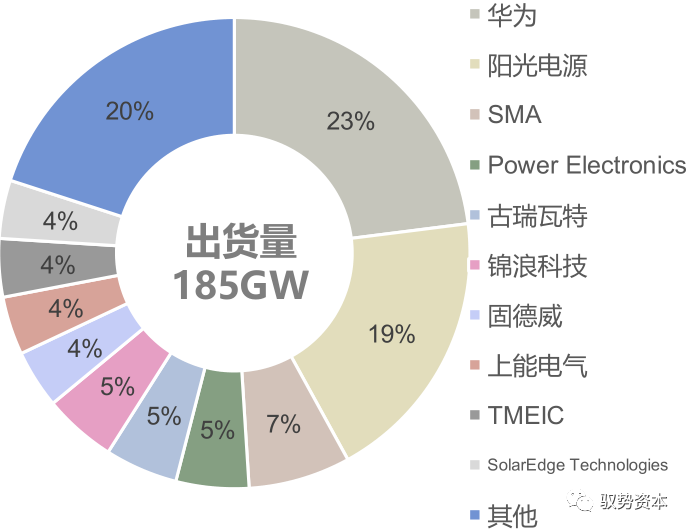
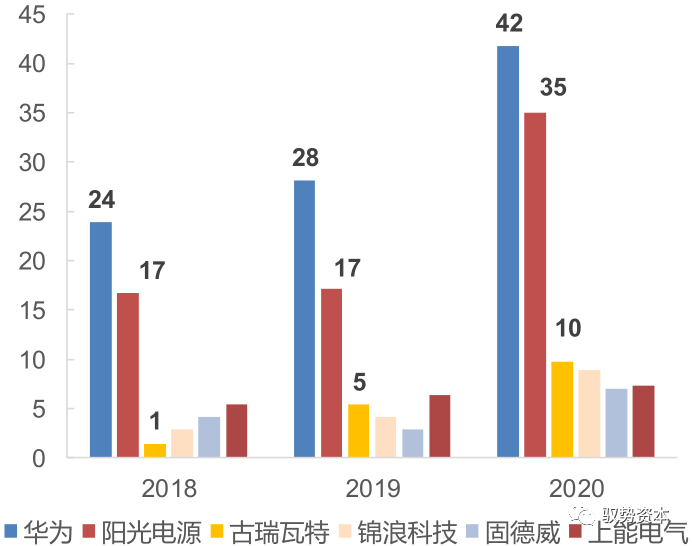
  • Domestic photovoltaic inverter manufacturers continue to make efforts. In 2020, the global PV inverter market shipments will reach 185GW, and the market shares of Huawei, Sungrow and SMA will be 23%, 19%, and 7% respectively, ranking the top three for five consecutive years. Chinese manufacturers such as Huawei, Sunshine Energy, Shangneng Electric, and Growatt have a combined market share of more than 50%, becoming the main supplier of photovoltaic inverters in the world.

Global PV inverter market shipment pattern in 2020:

7.png

Shipments (GW) of major domestic PV inverter manufacturers over the years:

8.png
Source: Polaris Solar Photovoltaic Network, compiled by Founder Securities Research Institute

String inverters are gradually replaced
Centralized inverter

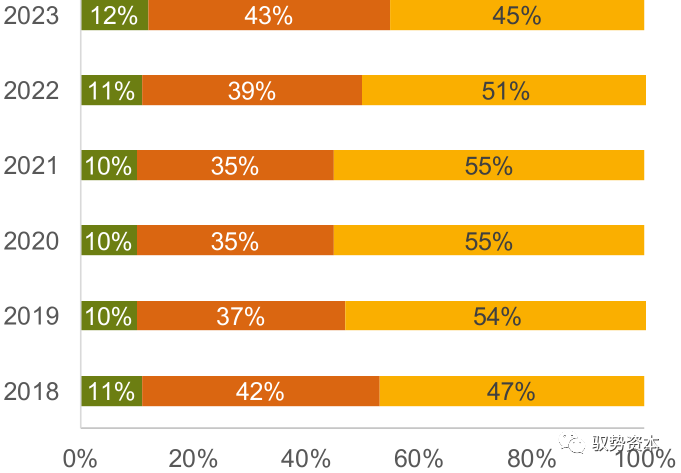
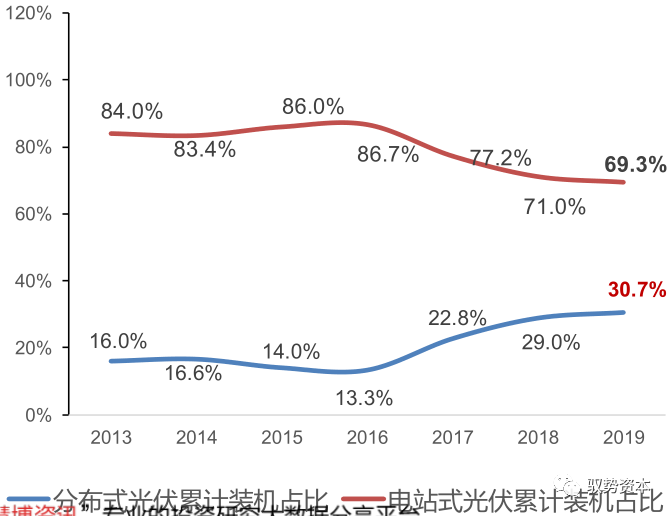
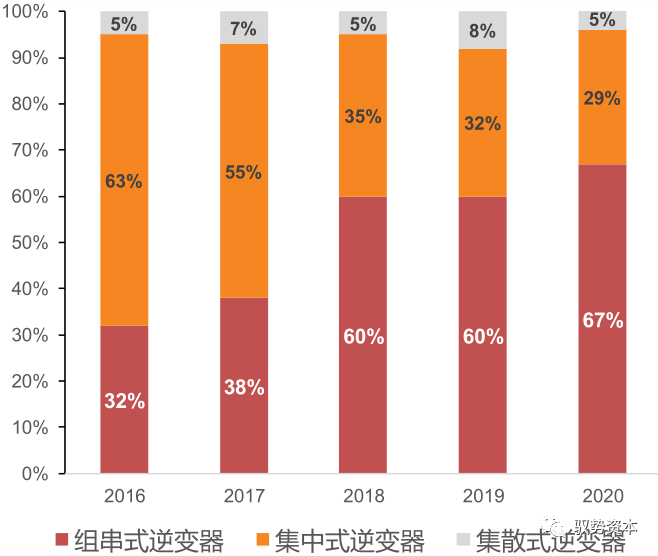
The proportion of distributed photovoltaic installed capacity increased. Since 2016, distributed power generation has developed rapidly, and the market share of cumulative installed capacity has continued to increase. In 2019, the market share of cumulative installed capacity of distributed photovoltaic power generation in my country exceeded 30% for the first time.

  • String inverter shipments account for the vast majority of the market. At present, inverter products are mainly divided into three categories, namely string inverters, centralized inverters and distributed inverters. String Inverter Due to the advancement of its production technology, the inverter structure has been optimized, the cost of high-power string inverters has been accelerated, and string inverters are gradually replacing centralized inverters, 2020 The market share of string inverters reached 67%.

The proportion of domestic distributed installed capacity has increased:

9.png

The proportion of inverter shipments:

10.png
Source: Prospective Economist, China Economic Research Institute, Founder Securities Research Institute

PV inverter
BOM cost

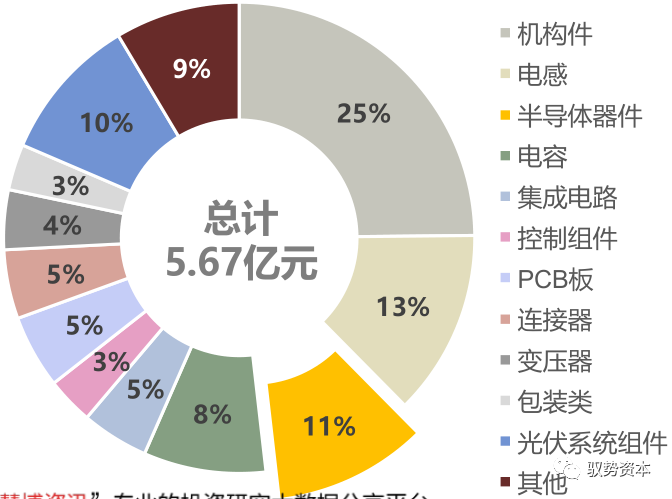
In 2019, the purchase amount of GoodWe raw materials reached 570 million yuan, of which the purchase amount of semiconductor devices (mainly IGBT components) was 60.06 million yuan, accounting for 10.6%. The main semiconductor devices account for about 10% to 15% of the cost of the inverter, and the amount reaches 214.4075 million yuan, accounting for 26.34% of the total raw material procurement. With the tight market supply and demand, the proportion of IGBT BOM is expected to increase.

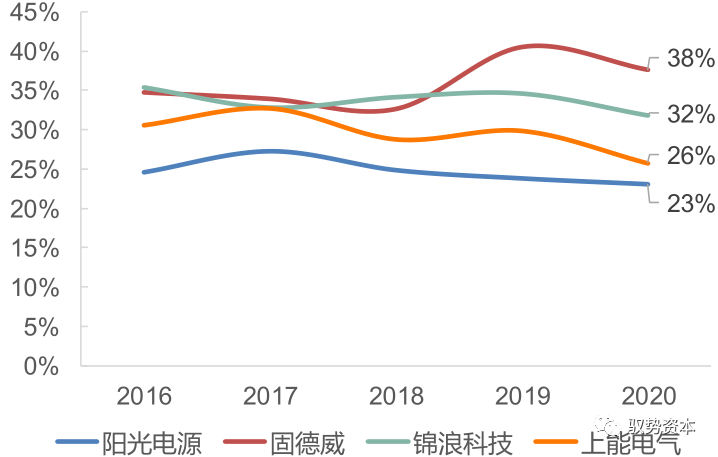
Compared with centralized inverters, string inverters have higher gross profit margins. Goodwe's products are mainly string inverters. Compared with the other three companies, the average gross profit margin is higher, and the gross profit margin in 2020 is 38%.

The composition of GoodWe's raw material procurement in 2019:

11.png

Gross profit margin of domestic mainstream photovoltaic inverter companies:

12.png
Source: GoodWe prospectus, GoodWe 2021 semi-annual report, compiled by Founder Securities Research Institute

PV system initial investment
Cost distribution

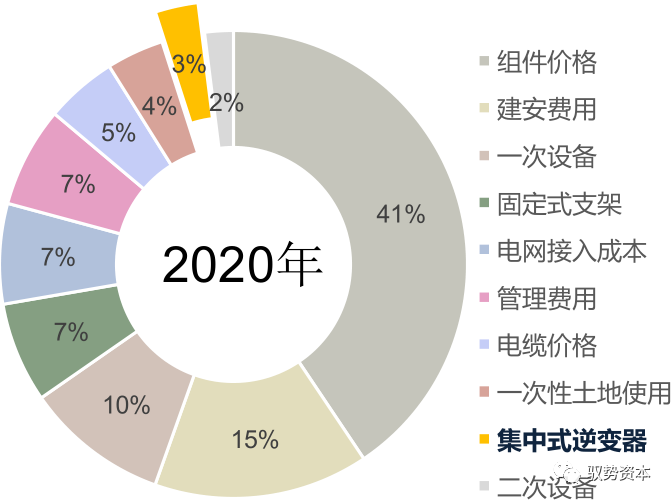
The initial investment cost of a ground photovoltaic system consists of components, brackets, inverters, land and construction costs. Among them, the price of components accounts for the highest proportion, accounting for 40.7% of the overall initial cost, and the centralized inverter accounts for a small proportion, only 3%.

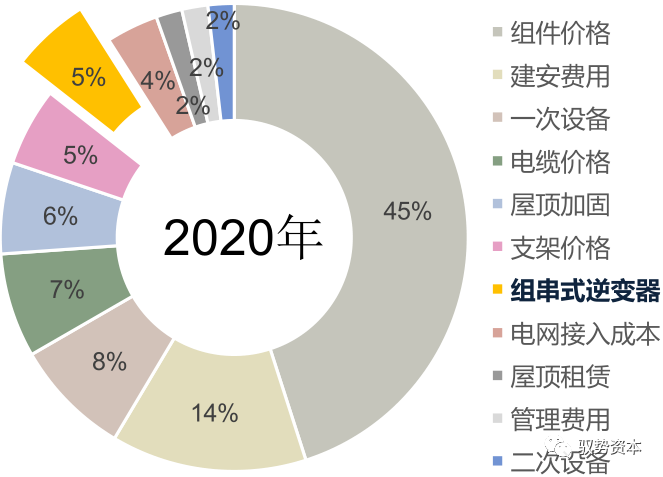
Compared with ground photovoltaic systems, distributed photovoltaic systems are mostly built on houses, thus reducing land use costs, increasing roof reinforcement and rental costs, and the cost of string inverters is higher than that of centralized inverters. , up to 5%.

Distribution of initial investment cost of power station photovoltaic system in my country:

13.png

Distribution of initial investment cost of distributed photovoltaic system in my country:

14.png
Source: Polaris Solar Photovoltaic Network, China Photovoltaic Industry Association, Founder Securities Research Institute

Power station photovoltaic ushered in
Development boom

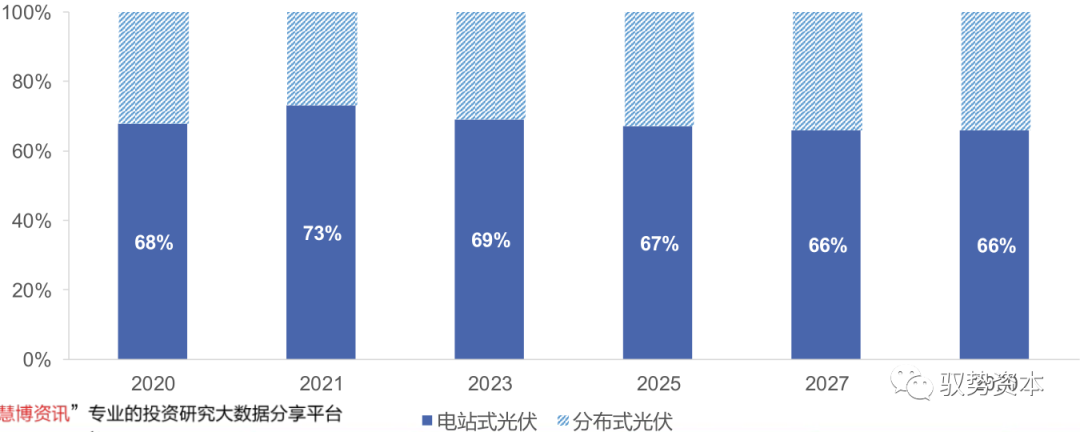
In 2020, large-scale ground power stations will account for 67.8%, and distributed power stations will account for 32.2%, of which household photovoltaics can account for about 65.2% of the distributed market. With the gradual grid-connection of bidding projects and affordable projects announced in 2020, as well as UHV delivery projects, it is expected that the proportion of installed capacity of large-scale ground power plants will further increase in 2021.

On June 20, 2021, the General Department of the National Energy Administration issued the "Notice on Submitting the Pilot Program for the Development of Rooftop Distributed Photovoltaics in the Whole County (City, District)", pointing out that the entire county (city, district) will promote the development of rooftop distributed photovoltaics. Construction is conducive to integrating resources to achieve intensive development, and is an important measure to accelerate the development of rooftop distributed photovoltaics. Distributed projects will still maintain a certain market share.

Market trends of different types of photovoltaic applications:

15.png
Source: Compiled by China Photovoltaic Industry Association, Founder Securities Research Institute

Power station photovoltaic system initial
Investment cost distribution

The initial full investment of China's power station photovoltaic system is mainly composed of the cost of key equipment such as components, inverters, brackets, cables, primary equipment, and secondary equipment, as well as land costs, grid access, construction and installation, and management costs. The cost of key equipment such as inverters has a certain room for decline with technological progress and scale benefits.

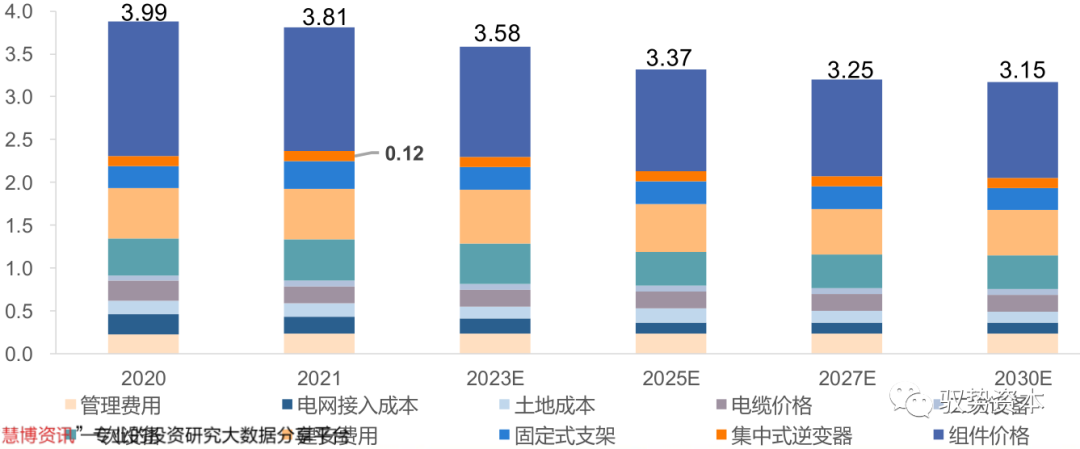
In 2020, the initial full investment cost of power station-type photovoltaic systems in China is about 3.99 yuan/W. It is expected that in 2021, with the gradual release of new production capacity in all links of the industry chain, the price of components will return to a reasonable level, and the initial full investment cost of photovoltaic systems can be reduced. to 3.81 yuan/W, of which the cost of centralized inverters accounts for 3%, about 0.12 yuan/W.

2020-2030 my country's power station photovoltaic system initial investment trends (unit: yuan/W):

16.png
Source: Compiled by China Photovoltaic Industry Association, Founder Securities Research Institute

Initial Distributed Photovoltaic System
Investment cost distribution

The initial full investment of China's distributed photovoltaic system is mainly composed of components, inverters, brackets, cables, construction and installation costs, grid access, roof leasing, roof reinforcement, primary equipment, and secondary equipment. One of the primary equipment includes box change, switch box and prefabricated cabin.

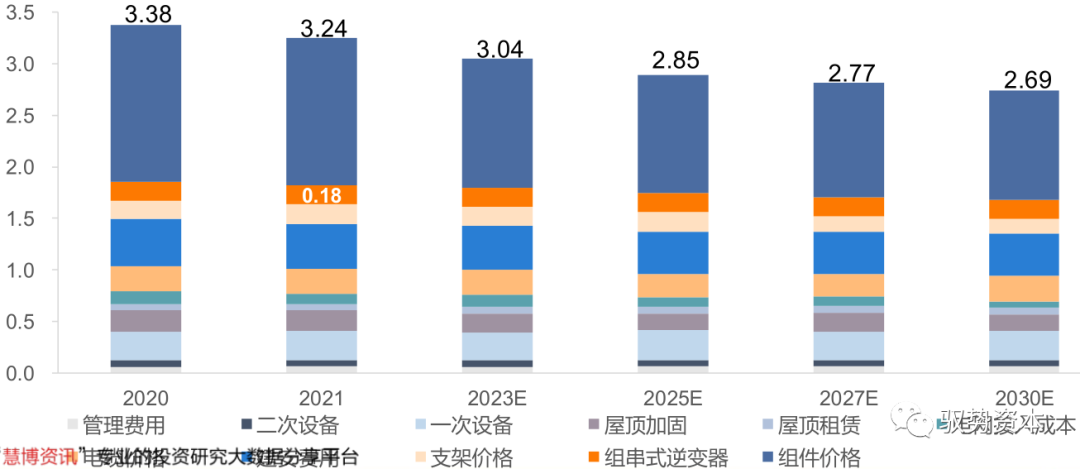
In 2021, the initial investment cost of distributed photovoltaic systems in China is 3.24 yuan/W, of which the cost of string inverters accounts for 5%, which is about 0.18 yuan/W.

Distribution of initial investment costs of distributed photovoltaic systems in my country from 2020 to 2030 (unit: yuan/W):

17.png
Source: Compiled by China Photovoltaic Industry Association, Founder Securities Research Institute

Global PV installed capacity
keep going up

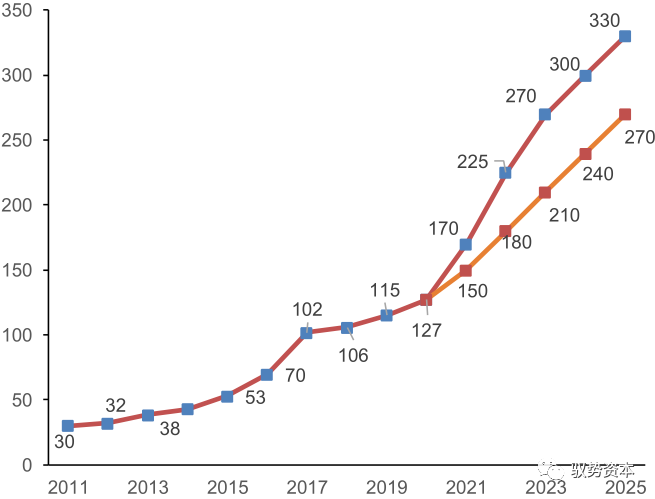
From the perspective of environmental protection and energy sustainable development strategies, governments of various countries have formulated policies to encourage and support solar photovoltaic power generation technology, and the photovoltaic industry is developing rapidly around the world. In 2020, the world's newly installed photovoltaic capacity is 127GW, a year-on-year increase of 10.43%. The compound annual growth rate in the past five years has reached 19.10%. It is expected that the global photovoltaic installed capacity will exceed 270GW in 2025, and it will reach 330GW in an optimistic scenario.

After 2011, China, Japan, and the United States have developed rapidly in the field of solar photovoltaic applications, becoming the main driving force for the growth of global photovoltaic applications.

2011-2025 Global PV new installed capacity forecast (GW):

18.png

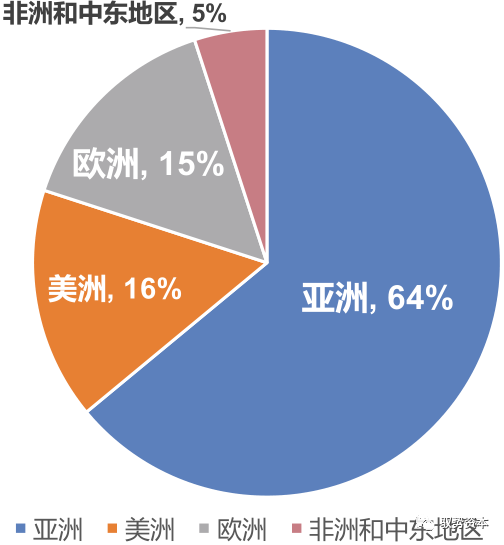
Global PV inverter market distribution in 2019:

19.png
Source: China Photovoltaic Industry Association, GoodWe listing prospectus, compiled by Founder Securities Research Institute

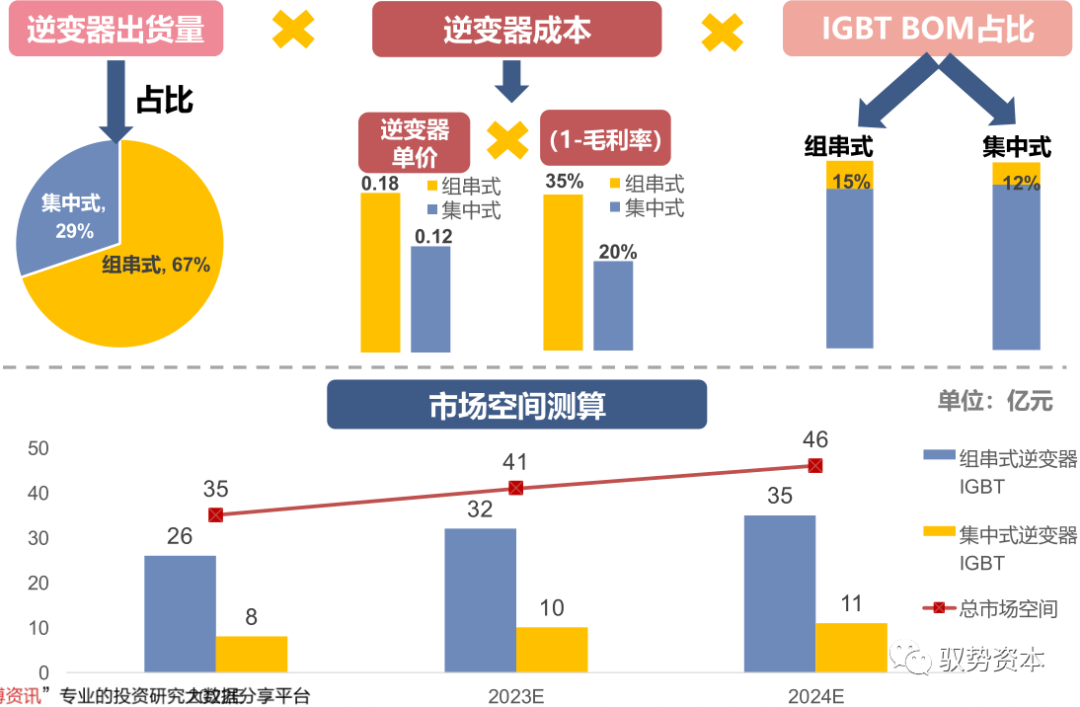
Market space: market estimation of IGBT for photovoltaic inverters


Photovoltaic IGBT Market
Space measurement

20.png
Source: Huajing Industry Research Institute, Founder Securities Research Institute, 1GW=109W

Industry trend: IGBT single tube and module coexist


Inverter circuit: IGBT VS
MOSFET

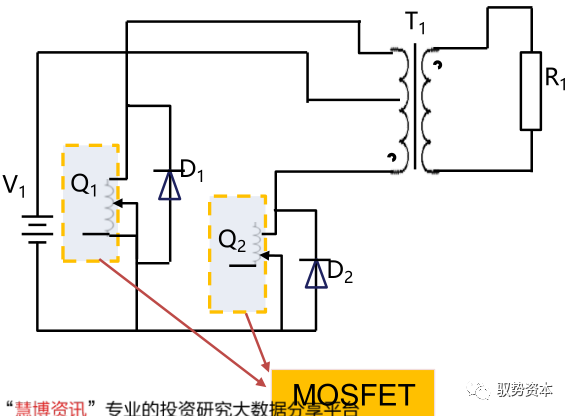
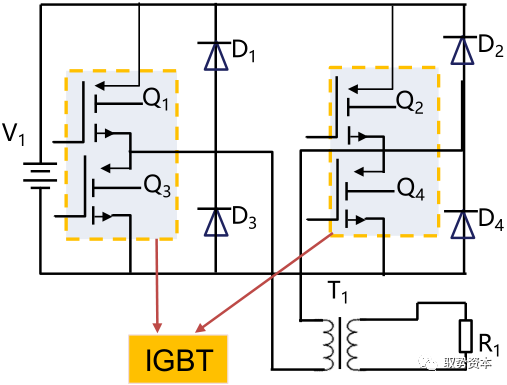
The push-pull inverter circuit composed of power field effect transistor MOSFET is relatively simple. The neutral tap of the transformer is connected to the positive pole of the power supply, and one end of the MOSFET is connected to the negative pole of the power supply. It works alternately and finally outputs AC power, but the ability to carry an inductive load is poor. And the efficiency of the transformer is also low, so there are some limitations in its application.

A full-bridge inverter circuit composed of an insulated gate bipolar transistor IGBT is used, in which the phase difference between Q1 and Q2 is 180°, and the value of the output AC voltage changes with the output of Q1 and Q2. Q3 and Q4 are turned on at the same time to form a freewheeling circuit, which can carry a larger voltage and the efficiency of the transformer is also higher. Therefore, the inverter circuit composed of IGBT is widely used.

Inverter circuit composed of MOSFET:

21.png

Inverter circuit composed of IGBT:

22.png
Source: Official website of Haifei Le Technology Co., Ltd., compiled by Founder Securities Research Institute

Photovoltaic IGBT chip
High reliability requirements

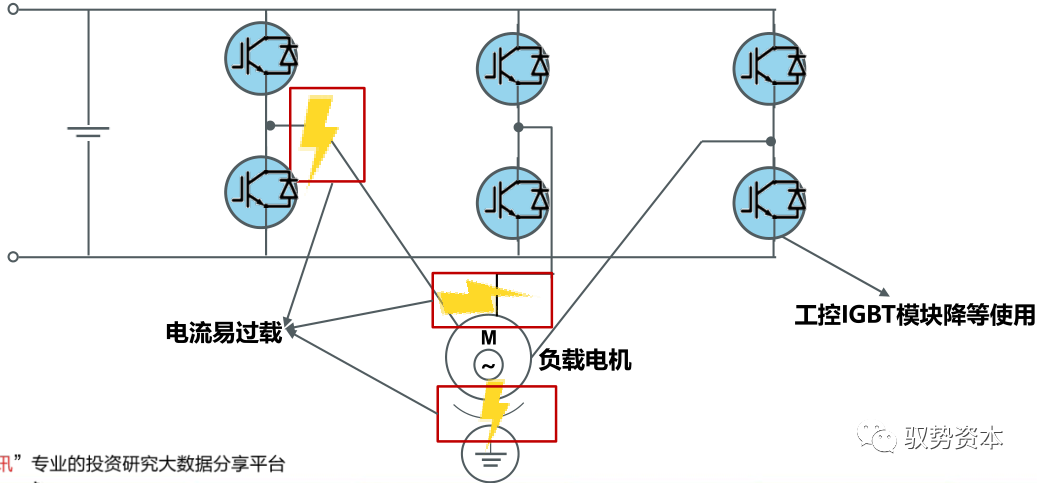
The localization of photovoltaic IGBT chips is difficult. If the industrial control is connected to the external load motor, there will be an overload situation. The current overload will increase the temperature and eventually cause the module to fail. Therefore, the manufacturer leaves a large margin when applying the IGBT module. For example, the rated current of the module is 100A, and the rated current is 40 -50A. Photovoltaics converts direct current to alternating current, and then uploads it to the power grid. It is not overloaded. Therefore, photovoltaic inverter companies basically use IGBT modules to the extreme. Therefore, photovoltaic companies have higher reliability requirements on IGBT chips than in the field of industrial control.

Industrial control motor overload circuit diagram:

23.png
Source: Electrical and Industrial Automation, compiled by Founder Securities Research Institute

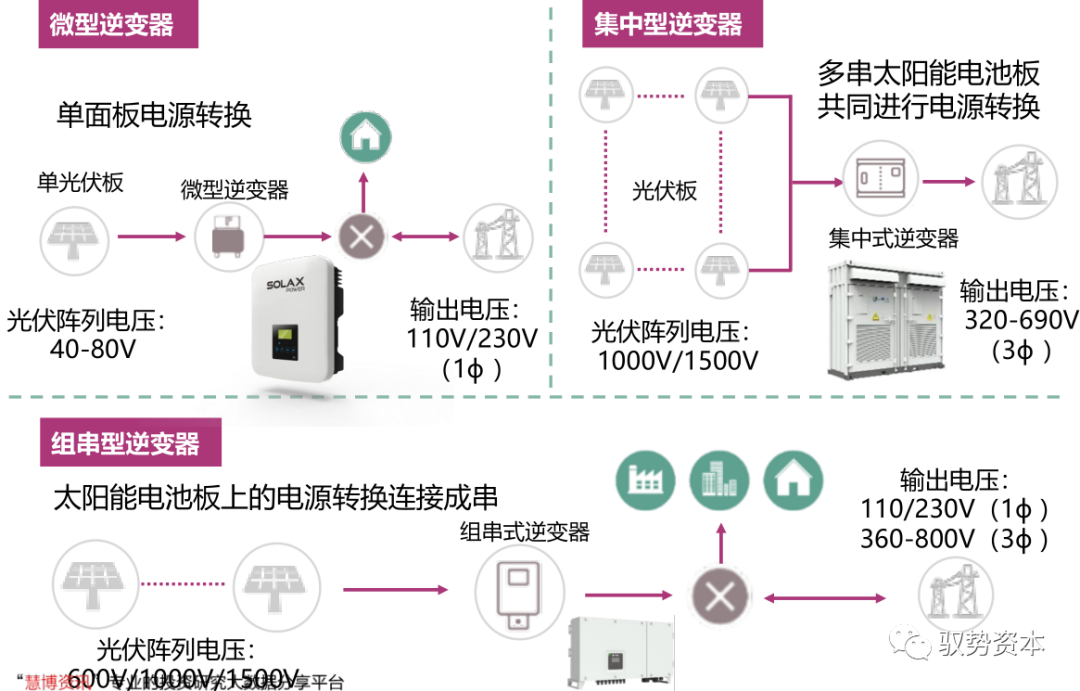
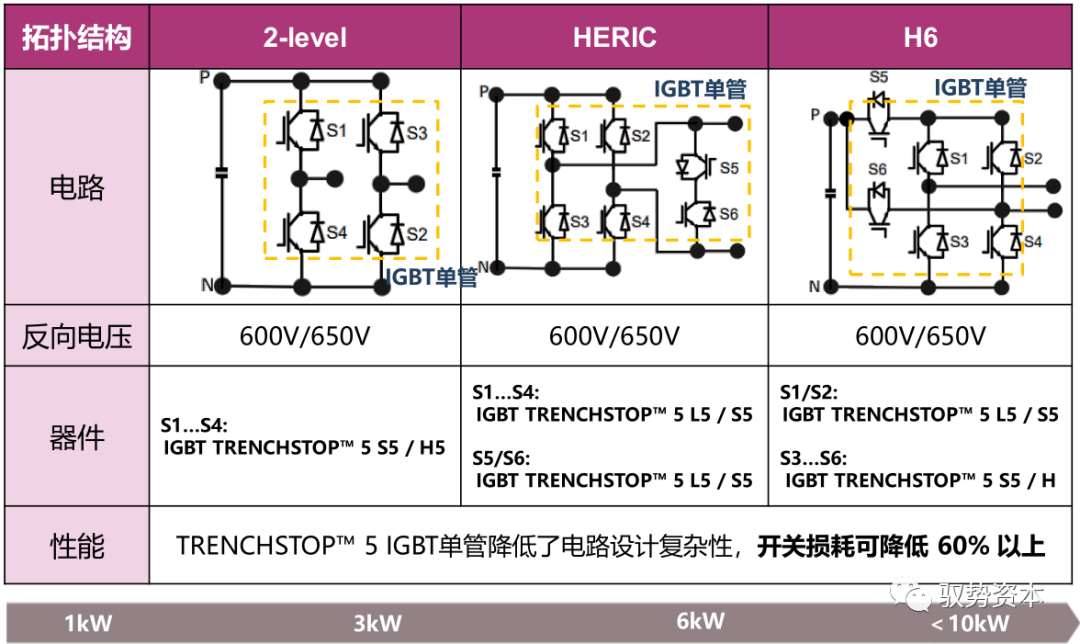
Photovoltaic inverter classification

24.png
Source: Infineon official website, compiled by Founder Securities Research Institute

Mainstream centralized inverter
solution

25.png
Source: Infineon's official website, compiled by Founder Securities Research Institute

Centralized inverter
Topology

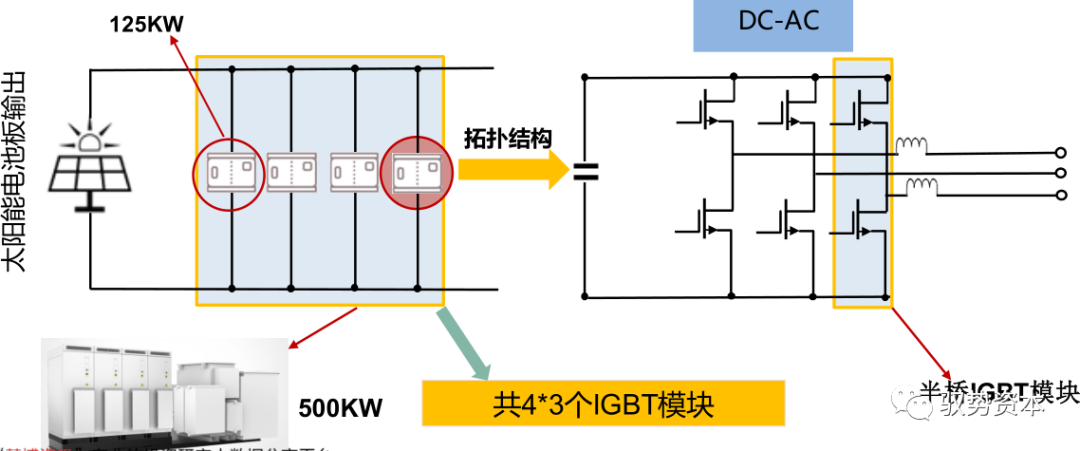
Centralized photovoltaic inverters only have a DC to AC topology, and most of them start at 125 kW.

  • A 500 kW centralized photovoltaic inverter uses four 125 kW inverters for system parallel connection, and a 125 kW usually uses three half-bridge 1200V 600A IGBT modules.

The working principle of 500 kW centralized photovoltaic inverter:

26.png
Source: Founder Securities Research Institute

Centralized inverter
Topology

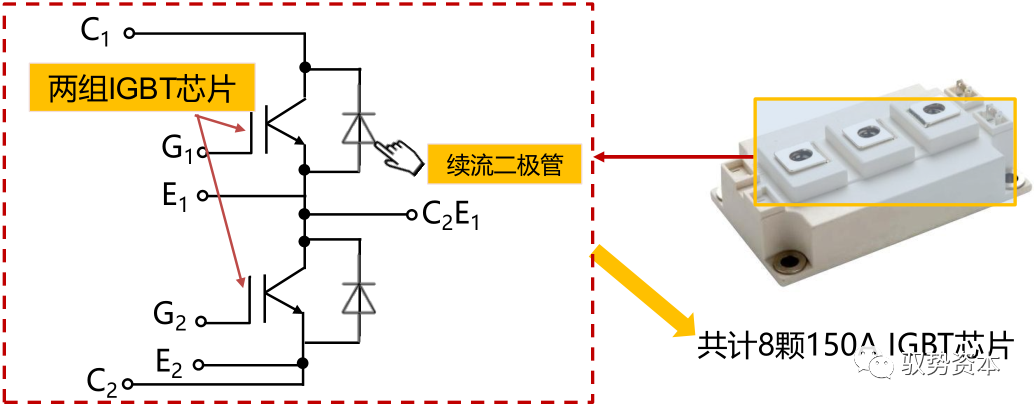
Half-bridge modules, also known as 2 in 1 modules, can directly form a half-bridge circuit. The current/voltage specification of the half-bridge module refers to each module unit, such as a 1200V 600A half-bridge module, which means that the current/voltage specifications of the two IGBT dies are 1200V 600A, that is, between C1 and C2. It can withstand instantaneous DC voltages up to 2400V.

A half-bridge 1200V 600A IGBT module uses two groups of IGBT chips inside, each group uses four 150A chips in parallel, and a total of eight 150A IGBT chips are used in the module.

1200V/600A half-bridge IGBT module circuit diagram:

27.png
Source: Electronic enthusiasts, compiled by Founder Securities Research Institute

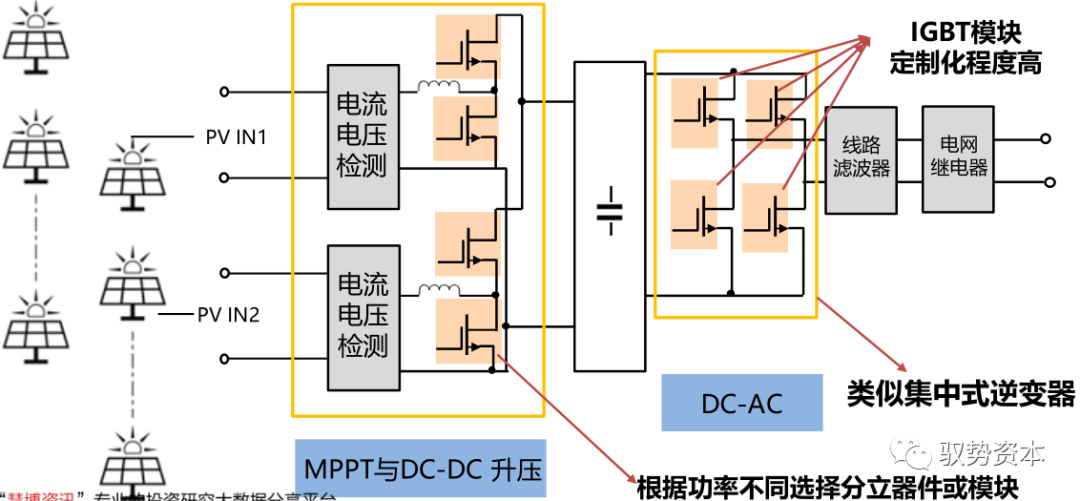
String Inverter
Topology

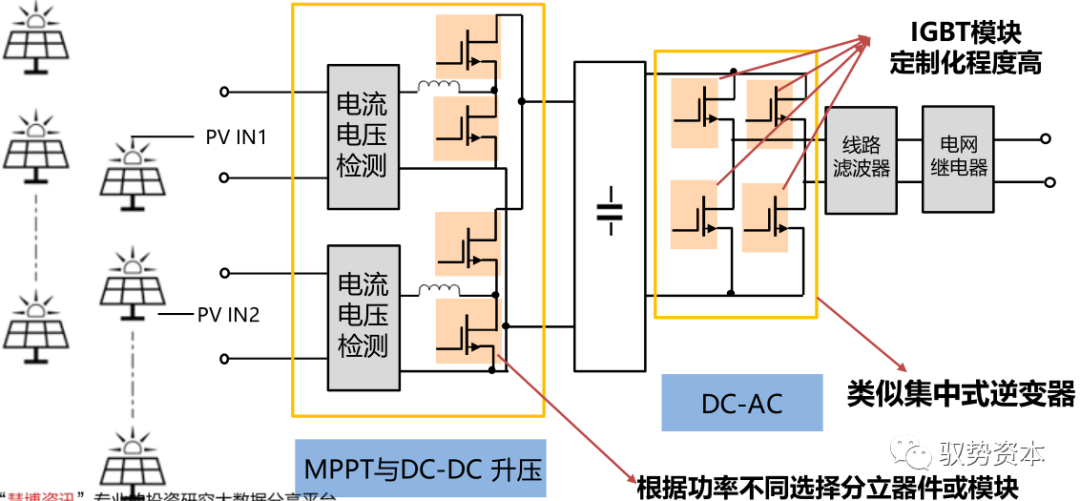
String PV inverters convert power on a single photovoltaic (PV) panel, typically rated at 400W. String PV inverters are usually based on two-stage power conversion. First, the DC-DC boost circuit converts the variable DC voltage to a fixed DC voltage (usually 40V-60 V), and at the same time, obtains energy from the photovoltaic panel (usually FSW=100 KHz) through maximum power point tracking technology (MPPT) . Then in the DC to AC stage, the inverter converts the DC power into a 1Φ AC power that is compatible with the grid.

28.png
Source: Nexperia official website, New Clean Energy official website, Founder Securities Research Institute

Single Phase Series Inverter
solution

29.png
Source: Infineon's official website, Mouser Electronics' official website, compiled by Founder Securities Research Institute

Three-phase series inverter
solution

30.png
Source: Infineon's official website, compiled by Founder Securities Research Institute

String Inverter
Topology

Compared with the centralized inverter, the structure of the string inverter is more complicated and the number of IGBTs used is more. The resonance of the string inverters should be controlled in parallel, otherwise it may cause a large area off-grid phenomenon.

  • Modules can be used in the DC-DC boost stage, or multiple single tubes can be connected in parallel, and the number of single tubes is calculated according to the current of the device. Assuming that the current is 300A, four 75A IGBT single devices or six 50A IGBT single devices can be used in parallel. The subsequent DC-AC stage is the same as the centralized inverter, and the high-power three-level IGBT module is used.

31.png
Source: Nexperia official website, compiled by Founder Securities Research Institute

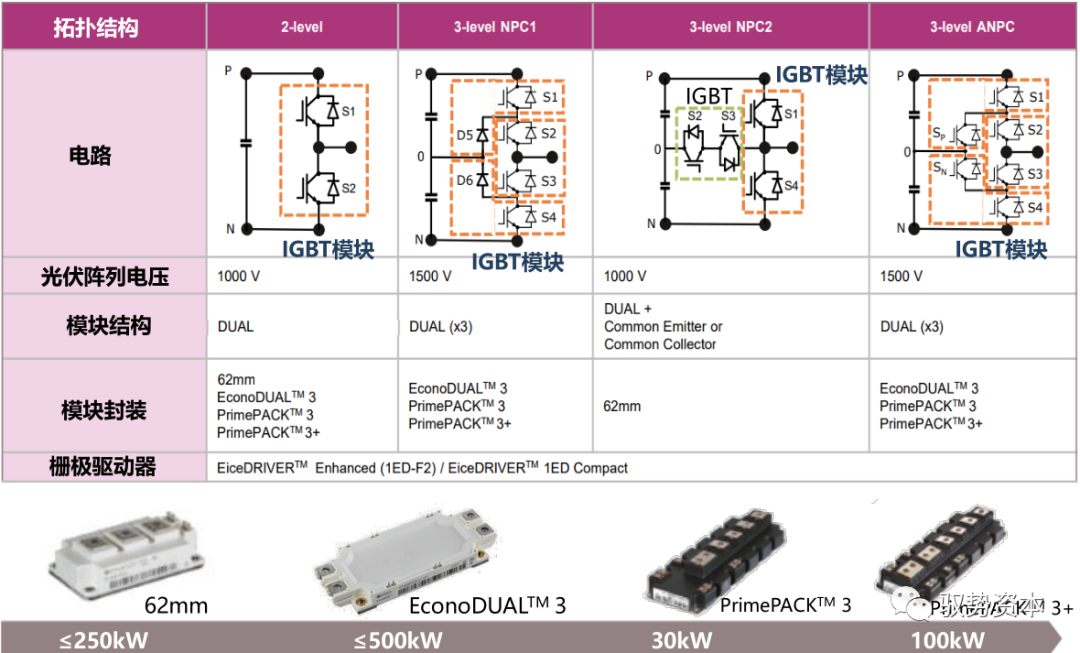
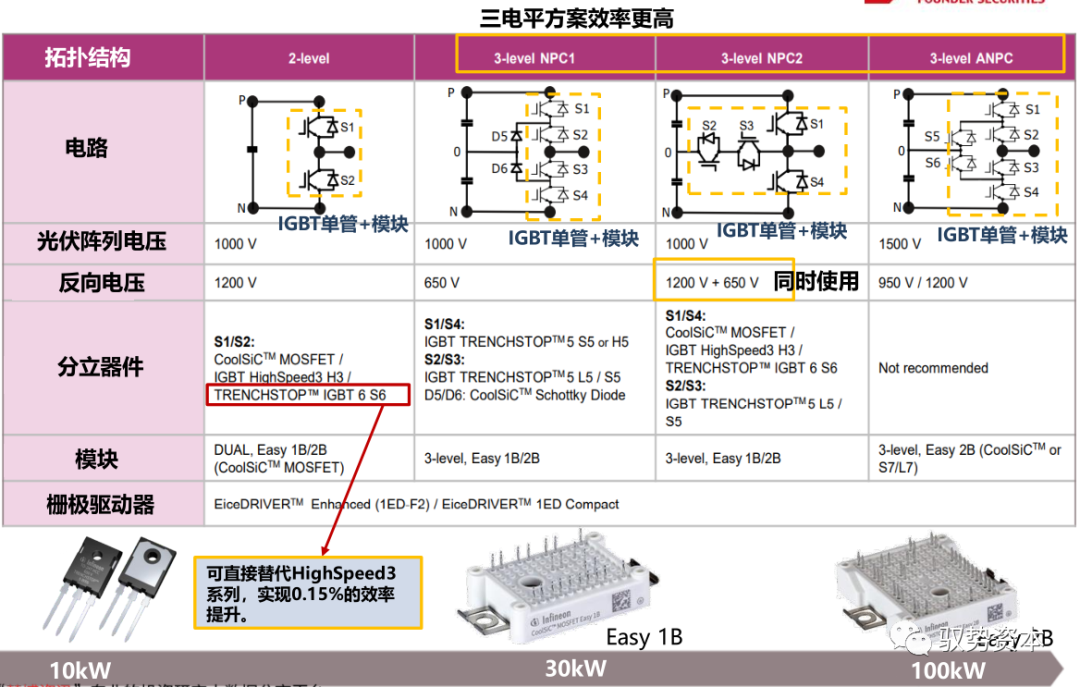
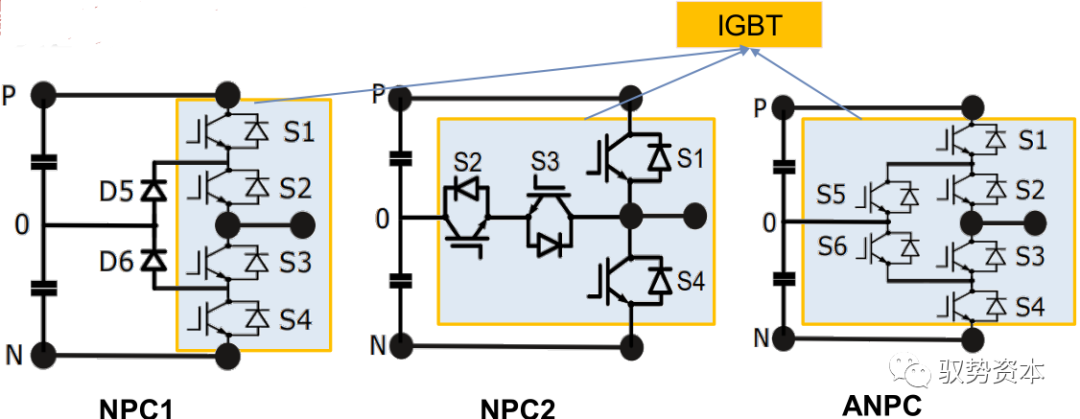
NPC three-level IGBT
Topology

There are two most commonly used structures for NPC topology, "I" type (also called NPC1) and "T" type (also called NPC2, MNPC, TNPC, NPP, etc.), which consist of 4 IGBTs and two clamping diodes .

The ANPC structure is an improved version based on the "I"-shaped NPC structure. The non-uniform loss distribution of the NPC topology will lead to an unbalanced temperature rise, which in turn limits the power output capability of the module. The ANPC structure has two more switches and two corresponding neutral point commutation circuits, which can be configured more flexibly and arbitrarily, so that the loss is not so unbalanced, and the output power of the module can be improved to a certain extent.

Three-level topology:

32.png

Demand for IGBT modules is expected
Continuous improvement

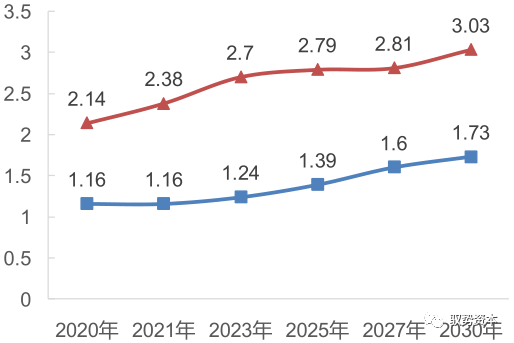
The power density of the inverter is significantly improved. In 2020, the power density of centralized inverters is 1.16kW/kg, the power density of string inverters for centralized power stations is 2.14kW/kg, and the power density of single-phase household photovoltaic inverters is 0.57kW/kg. The power density of the household inverter is 1.00kW/kg.

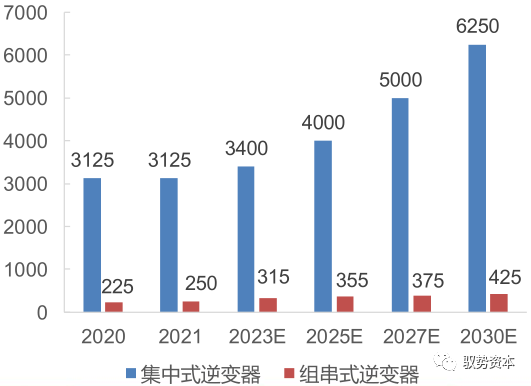
The power of the centralized inverter is larger than that of the string inverter. In 2020, the single-unit power of centralized inverters will be 3125kW/unit, and the unit-unit power of string inverters for centralized power stations will be 225kW/unit. The single-unit power of household photovoltaic inverters is 8kW/unit under 220V voltage, and about 15-20kW/unit under 380V voltage.

The increase in inverter power density and rated power will increase the demand for IGBT modules.

Changes in power density of inverters for centralized power stations:

33.png

Mainstream rated power of single inverter for centralized power station:

34.png

Investment Opportunities: The Time for Domestic Substitution

Global IGBT Competitive Landscape

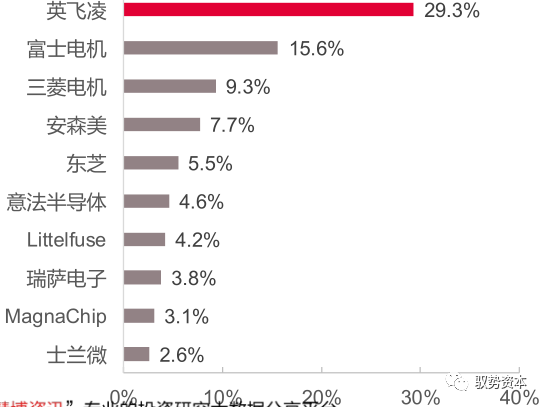
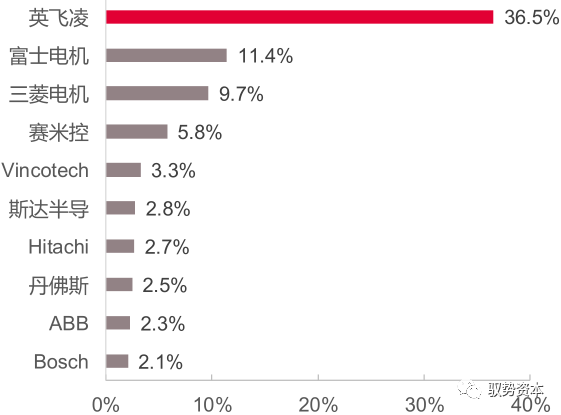
A virtuous circle of overseas companies: The higher the market share, the more feedback data the product has, the more experience accumulated, the more mature the product, the greater the profit volume, and the more investment in the new generation of research and development. In 2020, Infineon's market share in IGBT single-tube and module is the first, with 29.3%/36.5% respectively.

The development of domestic enterprises is hindered: Before the trade friction, because the products were not used by customers for a long time, it was impossible to accumulate data in the case of large-scale mass production.

IGBT single-tube market structure in 2020:

35.png

IGBT module market structure in 2020:

36.png
Source: Infineon official website, compiled by Founder Securities Research Institute
Contact: Chen Wenmiao  
Tel: 13510010815  
Mailbox: postmaster@jtlsemi.com  
Address: No. 17, No. 17, Zizhu Seven Road, Zhilin Community, Xiangmihu Street, Futian District, Shenzhen

Follow us

Copyright © Shenzhen Jingteli Microelectronics Co., Ltd. 粤ICP备2022063254号