


Industry information| 2022-05-25|admin

Semiconductor is not a wealth code, but a people's livelihood project.
Looking back at the growth of the United States, it was precisely in the third industrial revolution that it seized the opportunity to become the global center of the information civilization stage. The rise of the United States underscores the importance of technological prowess to a nation. Scientific and technological strength can greatly improve a country's international political status.
Of course, the driving effect of the technology industry on other industries will also have a driving effect on the economy of the country. Problems with the semiconductor supply chain could reduce U.S. gross domestic product by a percentage point in 2021, Brian Deese, director of the White House National Economic Council, said at the April 6 meeting. According to World Bank data, the US GDP in 2020 is 20.94 trillion, so the impact of semiconductor supply chain problems is about 209.4 billion US dollars.
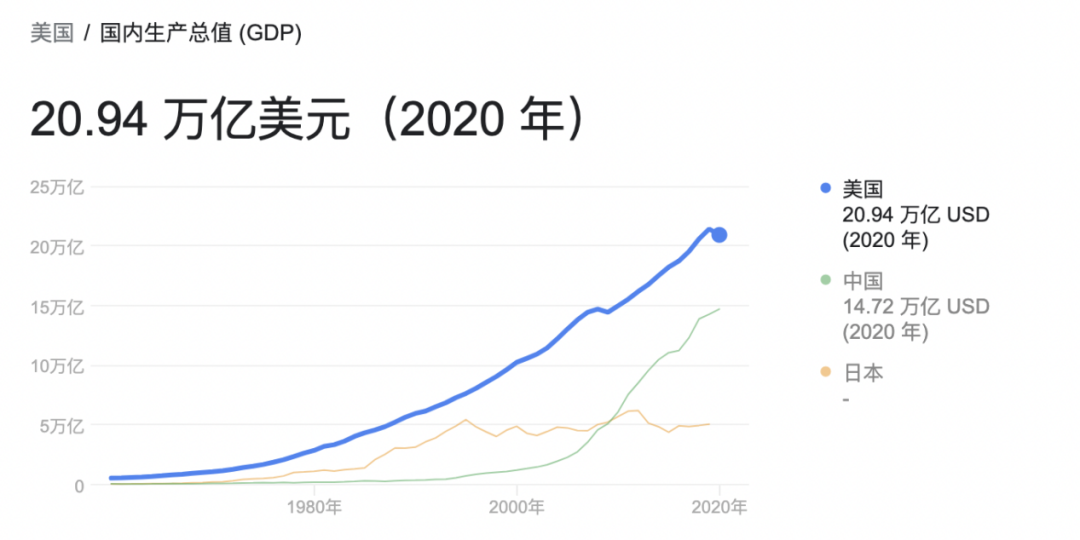
The technology industry may sound like an industry for a small number of people, but in fact, it directly or indirectly affects everyone's life. This article will discuss the importance of semiconductors to China and how to leverage China's national advantages to develop a semiconductor industry with Chinese characteristics.
Affected by a variety of factors, the shortage of various semiconductor products has become more and more serious, and the negative impact brought by it has spread more and more widely. The data mentioned by Brian Deese once again shows the importance of semiconductors to the economy. The United States is the number one economic power and the birthplace of semiconductor technology. Why is there so much "semiconductor anxiety"?
The most direct reason is that the trend of digitization is increasing the silicon content in various products. Semiconductors drive advances in communications, computing, healthcare, military systems, transportation, clean energy and countless other applications. They spawn new technologies that promise to make society better, including brain-inspired computing, virtual reality, the Internet of Things, energy-efficient sensing, automated devices, robotics, and artificial intelligence. As the application scenarios of semiconductors become more and more abundant, semiconductors are connected with more and more industries, which is the fundamental reason why semiconductors can drive the trillion-dollar market.
The development of the semiconductor market may be affected by various factors. For example, the epidemic has led to more and more common scenarios of working from home and studying, which has promoted consumer demand for electronic products, thereby increasing the demand for related semiconductor products. Another obvious example is that the demand for automotive chips from type to function is increasing after the development of automobiles to intelligence. As we all know, the serious shortage of automotive semiconductors has forced many car manufacturers to increase prices and stop production. On April 10, NIO, an electric vehicle manufacturer, announced that due to the release of raw materials, the price of some models will be increased by 10,000 yuan starting from one month later.
In addition to the basic role of semiconductors in the modernization process, the reason why countries are actively developing the semiconductor industry chain is that semiconductors play a leading role in the economy, and one of the most direct impacts is employment.
The complexity of the semiconductor industry chain determines that all aspects of the semiconductor industry need specialization and scale, which must be driven by people. The landing of each semiconductor factory will bring a large number of jobs. SIA data shows that the semiconductor industry directly employs more than 270,000 people in the United States and supports more than 1.6 million U.S. jobs in other industries. IMF researchers found that reducing the labor supply of a single large supplier of intermediate components to semiconductors by 25% reduces the average economic output by about 0.8%.
On January 25, 2021, Intel announced plans to invest at least $20 billion in a new chip factory in Ohio, which Intel said is expected to create 3,000 permanent jobs in Ohio. The project is expected to add 7,000 construction jobs and tens of thousands of support jobs. On March 15, Intel announced that it plans to invest 80 billion euros in Europe to develop the market in the next ten years, including the establishment of two chip factories in Magdeburg, Germany. Intel hopes to help achieve a balance between supply and demand in the global chip market. Intel said the two factories in Magdeburg would create around 3,000 high-tech jobs locally, around 7,000 in the construction industry, and "tens of thousands of additional jobs with suppliers and partners" post".
From this set of data, we can see that the landing of semiconductor factories can not only directly increase semiconductor-related jobs to attract semiconductor talents, but also promote employment in other industries. At the same time, due to the multiplier effect, the increase in manufacturing employment will also promote the development of the local service industry. In the short term, the construction of a single semiconductor factory can directly stimulate the local construction industry; in the long run, when a region has accumulated a certain industry in a certain industry, it will attract more related industry companies and form industrial clusters. As a high-tech industry, if a semiconductor industry cluster is formed in a certain region, it will also attract more high-end talents, making the region more competitive, and then driving the development of local GDP.
There are many examples to answer this question.
One of the most representative regions is Silicon Valley. As the origin of the semiconductor industry, after the birth of the first transistor, northern California and the southern part of the San Francisco Bay Area have become one of the regions where the world's high-tech technologies are gathered. Silicon Valley is not even an administrative area, its main part is Santa Clara County (Santa Clara County) at the southern tip of the San Francisco Peninsula, mainly from Palo Alto (Palo Alto) to the county capital (San Jose) Valley about 25 miles long.
There are thousands of high-tech companies in the world headquartered in Silicon Valley. Representative semiconductor companies include AMD, Apple, Applied Materials, Cisco, HP, Intel, Tesla and other technology giants. In 2021, California’s GDP will reach 3,356.6 billion. US dollar, per capita GDP reached 85546 US dollars, per capita GDP reached the first in the United States. At the same time, a large number of high-tech industries also keep California's growth momentum.

The chart above shows real GDP growth in 2021 by region in the U.S., with California ranking third in growth, and the Federal Economic Service says information services are the main driver of positive growth in California. In addition, the US Federal Economic Service also pointed out that the source of growth in Texas, the state with the largest GDP growth, also came from professional, scientific and technical services.
Another representative region whose economy is greatly affected by the semiconductor industry is Taiwan, China. The economy of Taiwan, China, changed from being dominated by agriculture in 1952 to being dominated by industry in 1986. In 1977, China Taiwan Industrial Technology Research Institute established the first 4-inch wafer foundry. Around this foundry, the Hsinchu Science Park broke ground in 1979, and the Hsinchu Science Park was officially established in 1981. Taiwan, China has also begun to develop a service industry based on electronic foundry. Driven by the high-tech foundry industry and service industry, Taiwan's economy grew by an average of 7.52% per year from 1981 to 1995, and the service industry grew by 51.67%. The service industry surpassed the industry to become the largest economic growth driver and became the main source of Taiwan's economic growth. .
In 2021, Taiwan's GDP will reach US$744.2 billion, with exports of US$446.45 billion and imports of US$381.17 billion. The export value of electronic components in 2021 will be 172.01 billion US dollars, of which chip exports will account for 155.5 billion US dollars. It can be said that the chip industry occupies half of Taiwan's economy.
The examples of ZTE and Huawei have highlighted the importance of the country's semiconductor supply chain, and apart from the geopolitical significance, the development of semiconductors is actually the only way to transform China's economy.
The pulling effect of semiconductors on the economy is self-evident, but compared with the pulling effect on the economy, the semiconductor industry is more important for China to maintain a stable supply chain of the domestic high-tech industry to ensure the independence of brands and how to avoid it. The middle-income trap after the manufacturing recession.
The middle-income trap is a situation in which a country reaches a certain income level due to some advantages, but stays at that economic level. Countries in the middle-income trap, due to rising wages, lose the competitiveness of their export products, cannot compete with other countries with low-cost production, and cannot enter the ranks of high-value-added markets and advanced economies.
South Africa and Brazil, for example, have struggled in recent decades in what the World Bank calls middle-income status (about $10,000 to $12,000 in gross national income per capita at 2010 prices). The countries trapped in the middle-income level are characterized by: low investment ratio; slow growth of manufacturing industry; insufficient diversity of industries; poor labor market conditions; low education level of citizens;
With the development of China's economy, whether China can overcome the middle-income trap has become a concern of the world. And a country's ability to innovate is one of the keys to escaping the middle-income trap. If technological innovation is weak, it will lead to insufficient domestic demand, it will be difficult to find new investment opportunities, and it will be difficult to develop innovative industries and new products, resulting in insufficient opportunities for effective investment and slow development of the entire social economy.
As a semiconductor industry that reflects a country's scientific and technological strength, when the competitiveness of the semiconductor industry is strong enough, it will have the opportunity to find new markets and maintain export growth. At the same time, because the industrial chain of the semiconductor industry is very long, the development of a certain link can drive the demand of upstream and downstream, and by expanding the development of each link of the domestic demand industry, it will be driven to form a virtuous circle.
Although it started late, my country's semiconductor industry has begun to take shape, but the uneven development of semiconductors in various regions is still the main problem of China's semiconductor industry.
At present, the layout of the domestic integrated circuit industry is mainly concentrated in the Beijing-Tianjin-Hebei region with Beijing as the core, the Yangtze River Delta with Shanghai as the core, the Pearl River Delta with Shenzhen as the core, and the central and western regions with Sichuan, Hubei and Anhui as the core. And these areas where the integrated circuit industry has begun to take shape are also increasing investment in the regional integrated circuit industry in terms of policies and funds.
However, with the scale development of the integrated circuit industry in some regions, the gap between different regions has become more and more disparate, which makes people wonder: is the status quo on a regional basis a good thing or a bad thing? Taking the recent outbreak in Shanghai as an example, when the integrated circuit industry is too concentrated, the risks to the supply chain are also greater.
It is impossible to develop a complete semiconductor industry chain in one region. Furthermore, even a country can develop a sound semiconductor industry chain. Zhang Zhongmou once said, "TSMC is not just about globalization, we are globalization from the beginning. Globalization means that there are no borders. The market is a global market, talents are global talents, and funds are global funds. Technology can also be obtained from anywhere, directly or indirectly. Obtained. Directly refers to alliances with others, and indirectly refers to hiring people of any nationality, and the technology developed by them.”
Combining this point of view with the situation of China's semiconductor industry, in the case that integrated circuits in some regions have "get rich first", developing the semiconductor industry in different regions according to local conditions is another way of "putting eggs in different baskets". For example, the Yangtze River Delta region with Shanghai as the core accounts for 50% of the domestic manufacturing and packaging and testing industries; Shenzhen focuses on the development of the design industry, with companies such as HiSilicon and ZTE; and the Northeast region, which started relatively late in the semiconductor industry, combines local The original industrial genes develop semiconductor equipment manufacturing and materials industry. For China, it is a kind of "nationalization" of China's semiconductors to take the advantages of various regions to develop the semiconductor industry efficiently.
For my country, the development of semiconductors is not to defeat anyone, but to go further and better for the Chinese economy.

Follow us